Spanglish Menu Location and Customer Reviews
Food lovers today enjoy menus that feel modern, simple, and exciting. One popular trend in the restaurant world is it. This menu style mixes Spanish and English language while blending Latin and American food culture. Many restaurants use this approach to attract younger customers and make traditional dishes easier to understand.
If you have ever visited a taco shop, food truck, or Latin café, you may have already seen a spanglish menu without noticing it. Restaurants often combine Spanish food names with English descriptions to create a fun and welcoming experience.
At places like Amigos Menu, this food style has become popular because customers enjoy both authentic flavor and easy-to-read menu items.
In this article, you will learn what it is, why restaurants use it, how it became popular, and why it plays a major role in modern food branding.
What Is a Spanglish Menu?
It is a restaurant menu that combines English and Spanish words. The term “Spanglish” comes from mixing the words Spanish and English together.
Restaurants use this menu style to:
- Make food names easier to understand
- Create modern restaurant branding
- Connect with bilingual customers
- Blend Latin and American food traditions
For example, a restaurant may write:
- Birria Taco Combo
- Loaded Nachos con Carne
- Pollo Burrito Bowl
- Churro Cheesecake
These names mix Spanish food terms with English descriptions.
What Clients Say About
Customers usually share positive opinions about restaurants that use it because the menu feels fun, modern, and easy to understand. Many people enjoy the mix of traditional Latin flavors with simple English descriptions that make ordering easier. Customers often say they like the creative food names, colorful presentation, and fusion-style dishes that combine Mexican and American food culture. Many guests also enjoy taking photos of their meals and sharing them online because Spanglish-style foods often look visually attractive. Reviews commonly describe these restaurants as friendly, flavorful, and family-oriented.
Where the Spanglish Menu Is Located
Spanglish menus are most commonly found in areas with strong Hispanic and Latino communities, especially in the United States. Restaurants in cities like Los Angeles, Houston, and Miami helped make this menu style popular. Today, many taco shops, food trucks, Latin cafés, and fusion restaurants use Spanglish menus to attract a wide range of customers. These menus are especially popular in fast-casual dining businesses because they combine authentic Latin flavors with modern presentation and easy-to-read descriptions.
Popular Foods Found on a Spanglish Menu
Many dishes on these menus are inspired by Mexican and Latin American cuisine. Restaurants often add American ingredients or modern cooking styles to create fusion meals.
Popular menu items include tacos, burritos, burgers, loaded fries, and desserts.
Tacos and Burritos
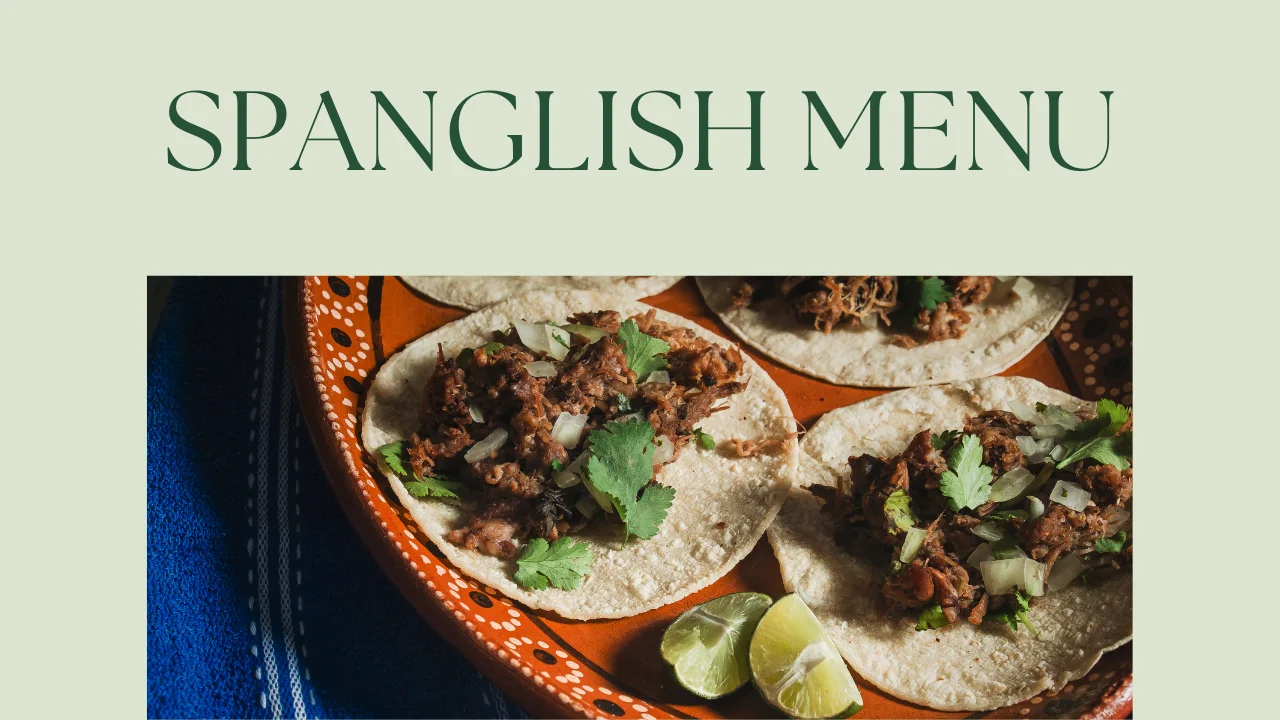
Tacos are one of the most common foods on it. Restaurants often create creative taco names with unique fillings and sauces.
Some examples include:
- Crispy Chicken Taco
- Birria Queso Taco
- Cali Burrito Supreme
- Steak Burrito Bowl
These dishes combine traditional Latin ingredients with American fast-casual presentation.
Loaded Fries and Fusion Burgers
Loaded fries have become a major food trend in modern Latin restaurants. Businesses top fries with cheese, meat, salsa, and spicy sauces.
Fusion burgers are also common. Restaurants may combine taco seasoning, jalapeños, queso, and grilled meat into one burger.
Popular examples include:
- Taco Burger
- Queso Melt Burger
- Loaded Carne Fries
These foods appeal to customers who enjoy bold flavors and large portions.
Desserts and Drinks
Desserts on it often mix Latin sweets with American desserts.
Popular options include:
- Churro Sundae
- Tres Leches Cake
- Dulce de Leche Cheesecake
- Cinnamon Churros
Restaurants also serve colorful drinks like horchata shakes and mango lemonade.
Main Features
It is different from a traditional restaurant menu. It combines culture, language, and modern food trends into one experience.
The table below explains the main features.
| Feature | Description |
|---|---|
| Mixed Language | Uses both English and Spanish words |
| Fusion Foods | Combines Latin and American dishes |
| Simple Descriptions | Helps customers understand menu items |
| Modern Branding | Uses trendy and colorful designs |
| Youth Appeal | Attracts younger audiences |
Restaurants often design these menus with bright colors, modern fonts, and food photos that look attractive online.
How Restaurants Use Spanglish Menus
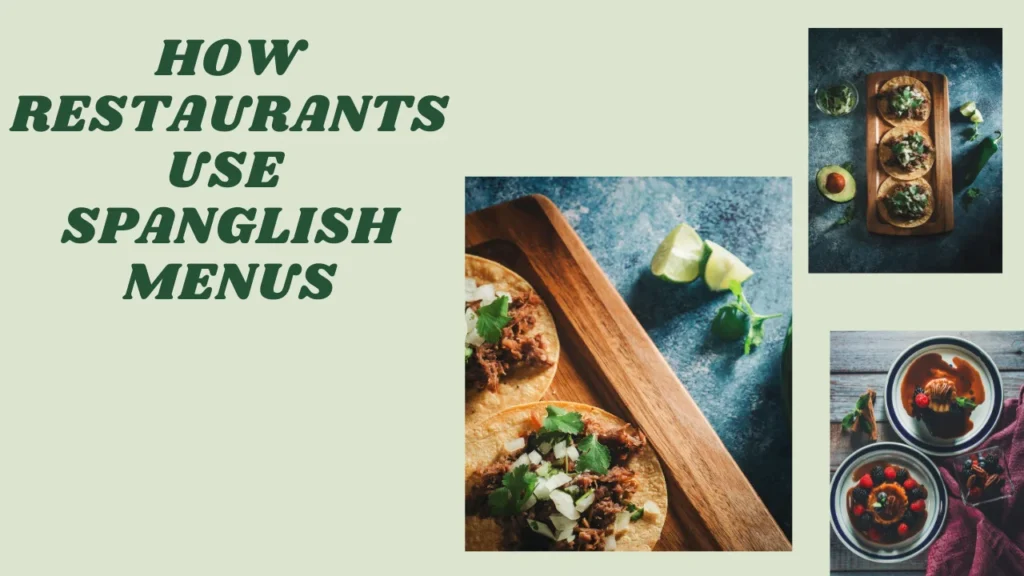
Restaurants use Spanglish menus in many creative ways. Some businesses use only a few Spanish words, while others create full bilingual menus.
For example, taco restaurants may use:
- Carne Asada Fries
- Queso Crunch Burger
- Pollo Street Tacos
These names sound exciting and help customers identify ingredients quickly.
Food trucks also use this style because short and catchy menu names work well for marketing. Many restaurants want customers to remember their dishes after seeing them once on social media.
Difference Between Traditional and Spanglish Menus
Traditional Latin menus focus more on authentic language and regional dishes. Spanglish menus focus on accessibility and modern branding.
The table below shows the main differences.
| Traditional Menu | Spanglish Menu |
|---|---|
| Mostly Spanish wording | Mixes English and Spanish |
| Focus on regional recipes | Includes fusion foods |
| Traditional presentation | Modern presentation |
| Authentic naming style | Trendy naming style |
| Limited English descriptions | Easy for all customers |
Many restaurants now combine both styles to keep authenticity while improving customer experience.
Why Customers Like Spanglish Menus
Customers enjoy Spanglish menus because they feel simple and welcoming. Some people may not fully understand traditional Spanish food names. A mixed-language menu helps them feel more comfortable when ordering.
Restaurants also benefit because customers can quickly identify ingredients and flavors.
Another reason people enjoy these menus is the modern atmosphere. Many restaurants use:
- Bright colors
- Neon signs
- Street-style designs
- Creative food photography
This branding style creates a fun dining experience.
SEO and Branding Benefits for Restaurants
It can also help restaurants improve online marketing. Creative menu names often perform well on social media platforms because they are memorable and visually appealing.
Restaurants that use modern menu branding often attract:
- Younger customers
- Food bloggers
- Tourists
- Social media users
Food businesses also use these menu styles to improve search visibility online. Unique menu items help restaurants stand out from competitors.
For example, people may search for:
- Best birria tacos
- Churro cheesecake near me
- Loaded carne fries
- Latin fusion restaurants
Creative menu naming helps restaurants appear in these searches.
How Social Media Increased the Trend
Social media platforms changed the restaurant industry. Customers now share food photos daily, and businesses want dishes that look attractive online.
Spanglish menus work well because they create catchy food names and colorful presentation styles.
Restaurants often design foods with:
- Melted cheese
- Bright sauces
- Crispy textures
- Layered toppings
These visuals attract attention on platforms like:
- TikTok
As a result, many restaurants use fusion foods to encourage customers to post pictures online.
Challenges of Using
Although Spanglish menus are popular, some restaurants face challenges.
Traditional food lovers may feel that fusion foods reduce authenticity. Some customers prefer original recipes and traditional presentation styles.
Restaurants must balance:
- Authentic flavor
- Modern branding
- Cultural respect
- Customer understanding
Successful businesses usually combine authentic cooking with modern presentation.
Tips for Creating a Good Spanglish Menu
Restaurants should focus on simplicity and clarity when designing a menu.
A good menu should:
- Use easy language
- Keep food names short
- Include clear descriptions
- Show important ingredients
- Match the restaurant’s branding
The table below explains important menu design tips.
| Tip | Benefit |
|---|---|
| Use simple wording | Helps customers order faster |
| Add food descriptions | Reduces confusion |
| Include attractive photos | Improves customer interest |
| Keep design clean | Makes menu easier to read |
| Use bold headings | Improves menu structure |
Good menu design improves customer experience and increases food sales.
Why Spanglish Menus Became Popular
Spanglish menus became popular in cities with large Hispanic communities. Restaurants in places like Los Angeles and Miami started using mixed-language menus to serve both English-speaking and Spanish-speaking customers.
Over time, social media helped this trend grow. Food businesses noticed that creative menu names attracted more customers online. Younger audiences especially liked restaurants with colorful branding and unique food combinations.
Today, many modern restaurants use Spanglish branding because it feels:
Social-media ready
Trendy
Friendly
Easy to understand
Growth of Spanglish Menus
The future of Spanglish menus looks strong because fusion food continues to grow worldwide. Younger customers enjoy restaurants that combine culture, creativity, and social media appeal.
Many food businesses now focus on:
- Latin street food
- Fusion tacos
- Modern Mexican cuisine
- Fast-casual dining
As restaurant trends continue changing, more brands will likely adopt this menu style.
Food experts also believe bilingual menus will become more common because they help businesses connect with larger audiences.
Final Thoughts
The spanglish menu trend continues to grow because it blends culture, language, and modern food creativity into one experience. Restaurants use this style to make traditional foods easier to understand while keeping Latin flavors exciting and modern.
Today, customers want menus that feel simple, fun, and visually appealing. Spanglish menus help businesses create memorable food branding while attracting a wide audience.
From tacos and burritos to churro desserts and loaded fries, these menus represent a modern mix of Latin tradition and American food culture.